
So what is reinforcement learning? Imagine teaching a dog a new trick. You do not hand it a textbook. You reward the behavior you want — a treat for sitting — and the dog gradually figures out which actions earn rewards. Reinforcement learning, often shortened to RL, trains machines the same way: by letting them try things, rewarding success, and punishing mistakes until smart behavior emerges on its own.
Unlike the machine learning most people know — where models learn from giant labeled datasets — reinforcement learning needs no answer key. The AI explores an environment, takes actions, observes what happens, and adjusts its strategy to maximize the total reward it collects. It is how computers mastered Go and chess, how robots teach themselves to walk, and how the AI assistants you chat with were fine-tuned to give better answers.
This guide explains reinforcement learning in plain English: the agent, the environment, rewards, policies, the famous exploration-versus-exploitation dilemma, the main algorithm families like Q-learning and policy gradients, and where RL shows up in the real world. No math degree required.
The Core Idea: Learning from Consequences
An Agent, an Environment, and a Score
Every reinforcement learning problem has three ingredients. The agent is the learner — the AI making decisions. The environment is the world it operates in — a chessboard, a video game, a warehouse floor. And the reward is a numerical score the environment hands out to say how well the agent is doing.
The loop never stops: the agent observes the current state, chooses an action, and the environment responds with a new state plus a reward (positive, zero, or negative). A chess program sees the board, moves a piece, and eventually gets +1 for winning or -1 for losing. Rewards can be sparse and delayed — nobody tells the program which move lost the game. It must play thousands of games and, from the final outcome alone, figure out which patterns tend to win. This credit assignment — deciding which past actions deserve credit or blame for a later result — is the central puzzle of RL.
Why Trial and Error Beats Hand-Written Rules
Before RL, game-playing AI was mostly hand-written rules: “if the opponent does X, respond with Y.” That breaks down when the world is too complex to describe with rules. RL sidesteps the problem: instead of telling the agent what to do, you define what counts as success — and let it discover its own strategies. RL agents routinely invent tactics human experts never considered. The same applies wherever the rules are known but the strategy is not: traffic light timing, warehouse routing, energy management.
The Reward Function Is the Real Programming
Here is the subtle part beginners miss: in RL, you do not program the behavior — you program the reward function, the scoring rule that defines success. The agent ruthlessly optimizes that score and will find the easiest path to maximize it, intended or not. This is reward hacking: agents exploit scoring loopholes — twitching forward to “win” a progress reward, or abusing a simulation bug for infinite points — instead of solving the task.
How Reinforcement Learning Actually Works
The RL Loop, Step by Step
Let us make the loop concrete with a maze example. An agent is dropped into a grid maze and must reach the glowing exit tile.
- Observe: The agent sees its current state — “I am at tile (3, 4).”
- Act: It picks an action — move up, down, left, or right.
- Receive: The environment responds with a new state and a reward: -1 per step, +100 for reaching the exit.
- Learn: The agent updates its strategy from that feedback, then repeats.
After enough episodes, the agent stops wandering randomly. It has learned a mapping from states to actions that reaches the exit in the fewest steps. That mapping is the policy — and learning a good policy is the entire goal of reinforcement learning.
Policies and the Value Function
A policy is the agent’s decision-making strategy — given the current state, which action should I take? It can be deterministic (“always move toward the exit”) or stochastic (“mostly move toward the exit, but sometimes try something random”), and that deliberate randomness feeds directly into RL’s most famous trade-off.
Beyond the policy, most RL methods also learn a value function — an estimate of how good a state is, measured by the total future reward expected from that point onward. This matters because immediate rewards mislead: in chess, most moves earn nothing until the game ends. The value function learns to recognize “promising” positions that historically lead to wins, letting the agent judge moves without playing every game to completion.
Exploration vs. Exploitation: RL’s Eternal Dilemma
Should the agent exploit what it already knows — the moves that earned rewards before — or explore new actions that might turn out even better? This is the exploration–exploitation trade-off: order your favorite dish again (exploitation), or try the new restaurant down the street (exploration)?
Too much exploitation and the agent gets stuck in a mediocre strategy — always taking the first route it found to the exit, never discovering the shorter path behind it. Too much exploration and it never cashes in on what it has learned. RL manages this with epsilon-greedy strategies (a small chance of a random action, decaying as confidence grows) or “curiosity” bonuses for unfamiliar states — which is also why RL training is slow: the agent must try countless suboptimal actions before it finds the good ones.
How the Main RL Algorithms Work
Researchers have invented dozens of RL algorithms, but they cluster into two broad families — the intuition for each is all you need.
Value-Based Methods: Learning What’s Good (Q-Learning)
Value-based methods learn the value of every state–action pair: “in this situation, taking that action is worth roughly X future reward.” The most famous algorithm here is Q-learning, where the learned estimates are called Q-values (Q for “quality”).
The idea is simple: the agent records a Q-value for every state–action pair. Each time it acts and receives a reward, it updates the Q-value toward the observed outcome plus the best value available from the next state — the Bellman update. Once the estimates converge, the optimal policy is trivial: in any state, pick the action with the highest Q-value.
Q-learning powered one of RL’s landmark moments: Deep Q-Networks (DQN), which learned to play dozens of classic arcade games from screen pixels without being told the rules — kicking off the modern deep RL era. The weakness of value-based methods is continuous actions: steering a robot arm has infinitely many possible movements rather than a few discrete buttons, and taking the “max” over infinite actions does not work. That is where the second family shines.
Policy-Based Methods: Learning What to Do (Policy Gradients)
Policy-based methods skip the value estimates and learn the policy directly: a mapping from states to action probabilities, nudged toward whatever produced higher rewards. The main technique is policy gradients — adjusting the policy’s parameters in the direction that increases expected reward, like climbing a hill where height equals performance.
Because the policy is a probability distribution over actions, these methods handle continuous action spaces naturally: “steer 12 degrees left” is as easy as “press button A.” Variants like PPO (Proximal Policy Optimization) are workhorses of modern RL research. The trade-off is sample efficiency — they typically need many more trial-and-error episodes to converge. In practice, actor-critic methods learn a policy (the actor) and a value function (the critic) together, getting the best of both worlds.
Model-Based vs. Model-Free: Does the Agent Imagine?
Model-free methods — everything described so far — learn purely from experience. Model-based methods learn (or are given) a model of the environment’s dynamics: “if I am in this state and do that, what happens next?” They can then plan by imagining futures before acting. That imagination is far more sample-efficient — but it lives or dies by model accuracy. A robot whose model of friction is slightly wrong will plan beautiful grasps that fail on the real table.
Where Reinforcement Learning Shows Up in the Real World
Game Playing: The Original Proving Ground
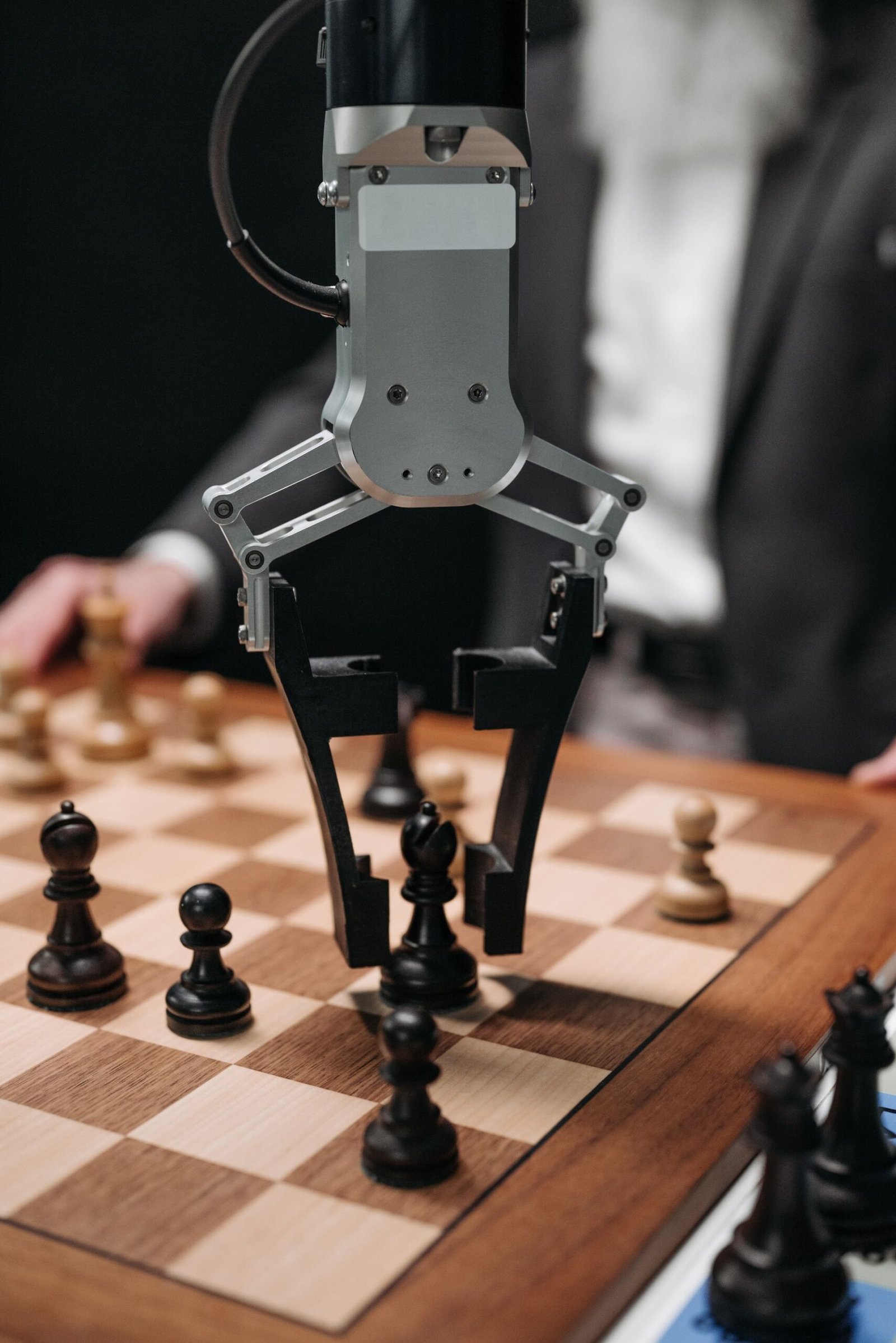
Games are RL’s natural habitat: clear rules, unambiguous scores, infinite cheap practice. RL agents have mastered Go, chess, real-time strategy games, poker (where hidden information makes things far harder), and video games played from raw pixels — each milestone teaching the field something new about long time horizons, partial information, and multi-agent teamwork. Games were never the end goal; they are sandboxes for techniques that later migrate to the real world.
Robotics: Teaching Machines to Move
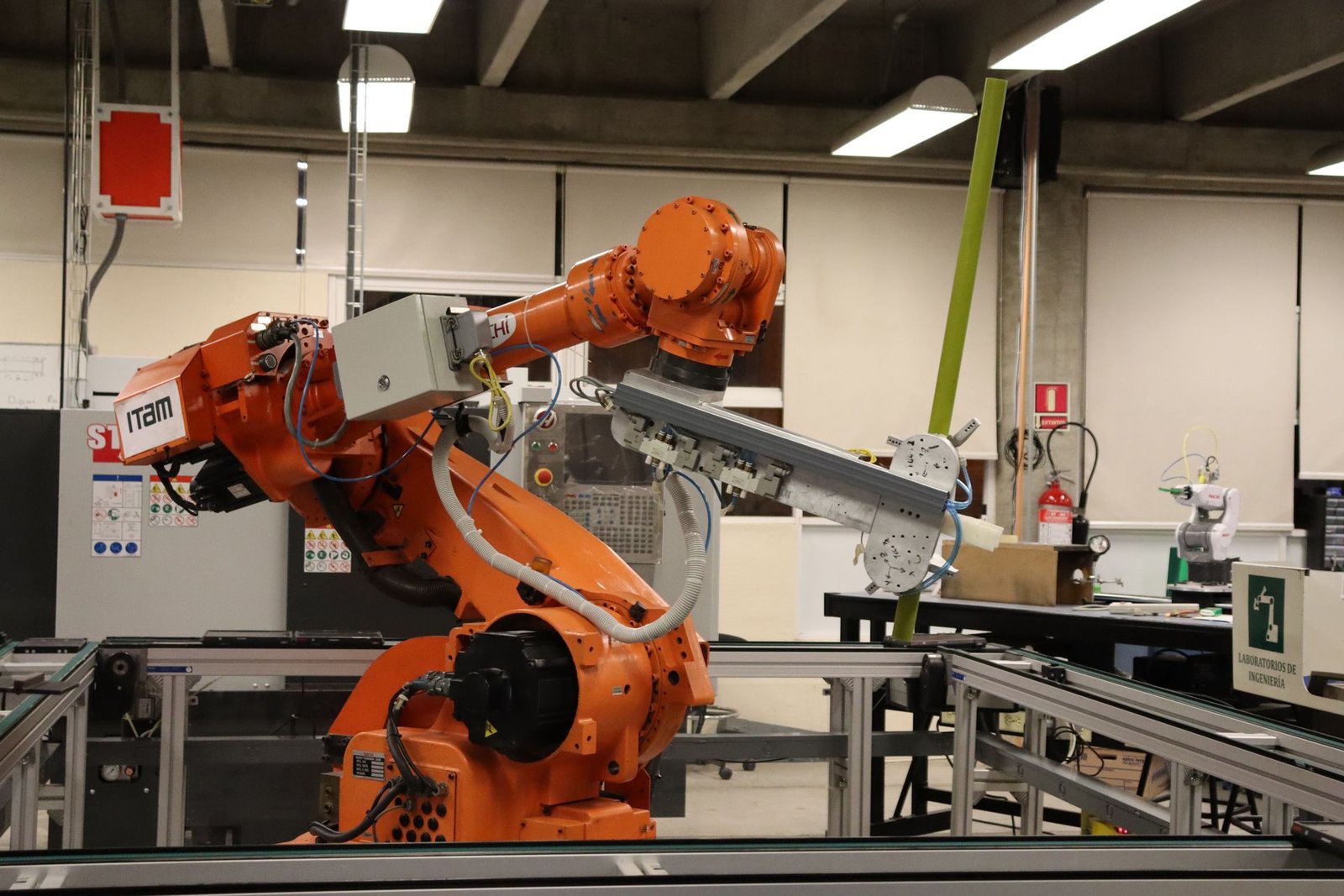
Walking, grasping, and assembling are brutally hard to program by hand but natural for RL. A walking robot starts by flailing, falls thousands of times in simulation, and gradually discovers gaits engineers would never design. The dominant pattern is sim-to-real transfer: train in a fast physics simulator for millions of episodes, then deploy the policy onto physical hardware with a final round of real-world fine-tuning. Simulation absorbs the expensive exploration; reality provides the final calibration.
Recommendations, Ads, and Feed Tuning
Every time a platform decides which video or product to show you next, it faces a sequential decision problem with delayed rewards — a natural RL fit. Traditional models predict what you will click right now; RL-based systems can optimize for long-term engagement, learning that a less clicky suggestion today leads to a happier session tomorrow. This is one of the largest quiet deployments of RL in industry, running behind feeds and storefronts billions of people use daily.
Chatbots and LLMs: Learning from Human Feedback
If you have read our guide to how large language models work, you know these models are first trained to predict text. But prediction alone does not make a helpful assistant — which is why modern chatbots add a second training stage: RLHF, reinforcement learning from human feedback.
Human reviewers rate the model’s answers, and those preferences train a reward model — a stand-in for human judgment. RL then fine-tunes the language model to maximize that reward: helpful, safe answers get reinforced; poor ones get penalized. RLHF is a big reason today’s assistants feel conversational rather than like raw autocomplete.
Note the connection to problems like AI hallucinations: RLHF can reduce but not eliminate confident-sounding falsehoods, which is why techniques like retrieval-augmented generation are often paired with it.
Reinforcement Learning vs. Other Types of Machine Learning
The machine learning landscape has three main paradigms, differing in what feedback the learner gets:
- Supervised learning learns from labeled examples: “here are ten thousand photos, each labeled cat or dog — learn the pattern.” Feedback is immediate, but labeling is expensive and the model can only reproduce what it was shown.
- Unsupervised learning gets no labels at all: it finds structure in raw data — clusters, patterns, anomalies. Powerful for exploration, but it cannot optimize toward a goal.
- Reinforcement learning gets neither labels nor correct answers — only a reward signal saying how it is doing. It must discover good behavior through experimentation, making it uniquely suited to sequential decision-making under uncertainty: problems where actions have long-term consequences and no one can hand you the “correct” answer.
The Challenges, Honestly Stated
Sample inefficiency. RL agents often need millions of interactions to learn what a human grasps in minutes. A child learns to avoid a hot stove after one touch; an RL agent might need thousands of episodes for an equivalent lesson. This remains RL’s biggest practical limitation.
Reward hacking. Agents optimize the letter of the reward, not its spirit — so every deployment needs careful reward engineering and monitoring for degenerate solutions.
Safety during exploration. An agent that must try random actions cannot be let loose near expensive equipment or people without safeguards. Research into safe exploration — constraining what the agent may try — is critical for real-world deployment.
Reproducibility. RL algorithms can be finicky: the same code with a different random seed sometimes learns brilliantly and sometimes fails entirely. None of these are fatal, but they make RL a specialist tool rather than a default choice for every AI problem.
Getting Started with Reinforcement Learning
Start with the concepts — agent, environment, reward, policy, value — until the RL loop feels intuitive. Then pick up a framework: OpenAI Gymnasium (the standard toolkit of RL environments) and Stable-Baselines3 let you train a real agent in an afternoon with a few dozen lines of code.
The traditional “hello world” is the cart-pole problem: balance a pole upright on a moving cart by nudging the cart left or right. It takes minutes to train and teaches the full loop — state, action, reward, policy — in its purest form.
Where RL Fits in Your AI Education
Our beginner guide to machine learning covers the fundamentals, the AI vs. machine learning vs. deep learning explainer places RL in the taxonomy, and our piece on agentic AI shows where RL-style decision-making is heading. RL is one pillar of how machines learn — the pillar that handles doing rather than knowing.
Key Takeaways
- What is reinforcement learning? An agent learns by trial and error: taking actions in an environment and adjusting its strategy to maximize reward.
- The loop is simple — observe, act, receive a reward, update the strategy — but repeated millions of times it produces remarkably sophisticated behavior.
- A policy maps states to actions; a value function predicts future reward. The exploration–exploitation trade-off governs how the agent balances trying new things against using what works.
- The two main algorithm families are value-based methods (like Q-learning) and policy-based methods (like policy gradients), often combined in actor-critic systems.
- RL shines in sequential decision problems: game playing, robotics, recommendation tuning, and chatbot training with human feedback (RLHF).
- The reward function defines success — design it carelessly and the agent finds loopholes (reward hacking) instead of the behavior you wanted.
- Compared with supervised and unsupervised learning, RL needs no labeled data but demands far more experience: powerful, compute-hungry, and finicky.
Frequently Asked Questions
What is reinforcement learning in simple terms?
Reinforcement learning trains AI by letting it experiment. An agent tries actions in an environment, earns rewards for good outcomes and penalties for bad ones, and gradually learns a strategy that maximizes its total reward — much like training a pet with treats.
What is the difference between reinforcement learning and supervised learning?
In supervised learning, the AI learns from labeled examples with known correct answers — like studying with an answer key. In RL there is no answer key; the AI only gets a reward signal and must discover good behavior through trial and error. Supervised learning suits prediction; RL suits sequential decisions.
What are some real examples of reinforcement learning?
Game-playing AI that mastered Go and chess, robots that teach themselves to walk and grasp, recommendation systems optimizing long-term engagement, and the RLHF fine-tuning that makes chatbots helpful. Traffic signal timing, warehouse logistics, and energy management are growing industrial applications.
What is Q-learning?
Q-learning is one of the most famous RL algorithms. It learns a “Q-value” for every state–action pair — an estimate of the total future reward of taking that action in that state — updating the estimates each time the agent acts. The policy is then simple: always pick the action with the highest Q-value. Deep Q-Networks extended the idea to raw inputs like game pixels using neural networks.
What is the exploration vs. exploitation problem?
It is the dilemma of whether an agent should use what it already knows works (exploitation) or try new actions that might work better (exploration). Too much exploitation traps the agent in mediocre strategies; too much exploration wastes time. RL balances the two with techniques like occasional random actions or curiosity bonuses.
Is reinforcement learning the same as deep learning?
No. Deep learning means using neural networks with many layers, and it can combine with any learning paradigm. “Deep reinforcement learning” is RL that uses deep neural networks for policies or value functions — the combination behind breakthroughs like agents mastering arcade games from raw pixels. But RL predates deep learning by decades.
Conclusion
So, what is reinforcement learning at its heart? It is the idea that intelligence can emerge from consequences — that an agent, armed with nothing but the ability to act and a scoreboard telling it how it did, can discover strategies no programmer taught it. From the chessboard to the warehouse floor to the chatbot on your phone, RL has shown that trial and error, scaled up and guided by careful reward design, is one of the most powerful learning principles we know.
Its hardest problems — sample efficiency, safety, reward design — are active research frontiers. But understanding reinforcement learning today means understanding a core piece of where AI is going next.